
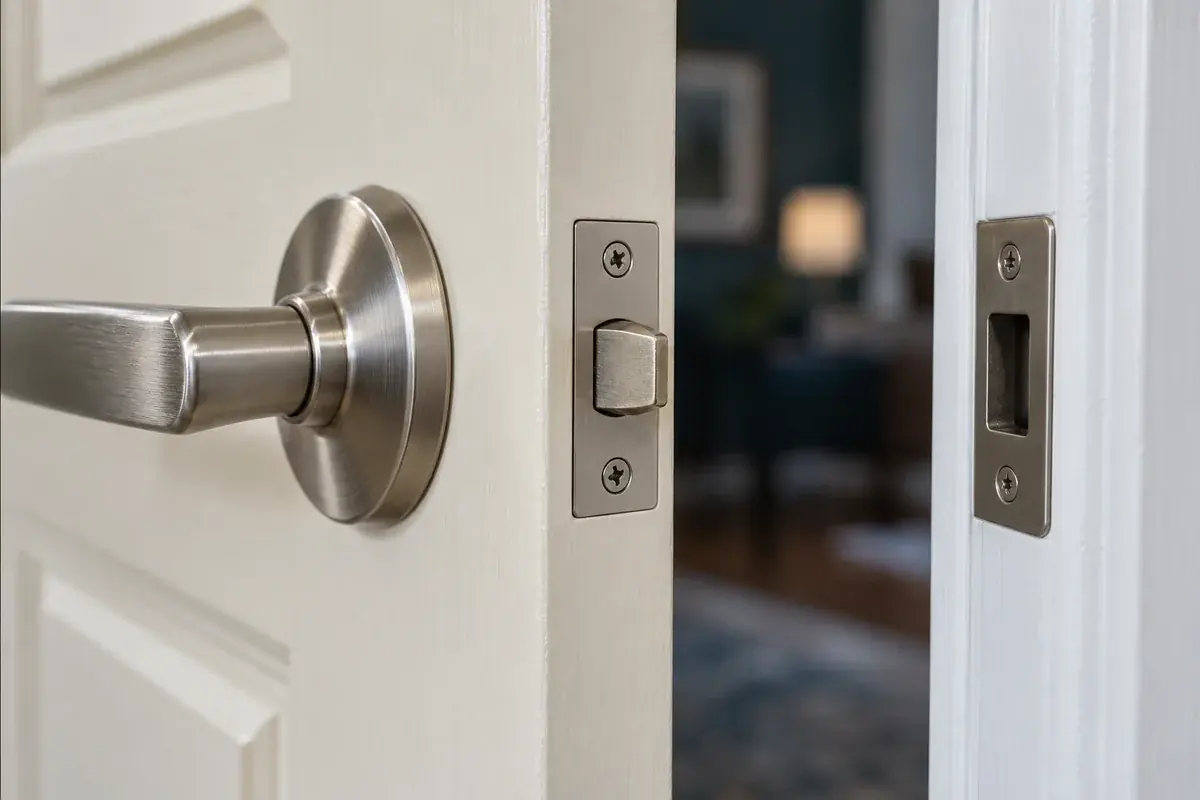
Does one key stick, or does every key?
You do not need to diagnose a lock to describe it well. A few observations from normal use can help separate a worn or damaged key, a difficult lock and a door that is no longer closing as it used to.
First, stop forcing it
If a key bends, catches or needs unusual force, stop. Do not turn a minor inconvenience into a broken key or a lockout by repeating the same test. Keep an available safe entrance accessible and describe what happened before the problem became worse.
When you speak to someone about lock repair, start with the action that failed: inserting the key, turning it, moving the handle or closing the door.
Keep these observations separate
A spare that worked normally during ordinary use is useful information. So is a problem that appeared with every key. That difference is a clue to discuss, not a diagnosis or a reason to force another attempt.
A key may turn while the latch still fails to release. A door may latch only after being pushed or lifted. Describe each action separately so the issue is not reduced to “the key does not work.”
A change in keyholders is another request
If the hardware behaves normally but old copies are unaccounted for, the question is who should retain access. Rekeying suitable locks may be relevant. It does not automatically correct door alignment, a loose handle or worn components.
After moving into a Rosedale home, make one list of doors you want included in an access change and another of any symptoms already present. That keeps the agreed scope clear.
A short description to take to the call
“The key goes in, but the latch does not release” gives more information than “the lock is broken.” Add which entrance is affected, when it last worked normally and who can authorize work. For a shared property near Kenwood Avenue, include the unit and distinguish your own door from the building entrance.
There is no need to supply a technical diagnosis. Ask what can be assessed, what information is needed and how a repair or replacement recommendation will be explained.
